
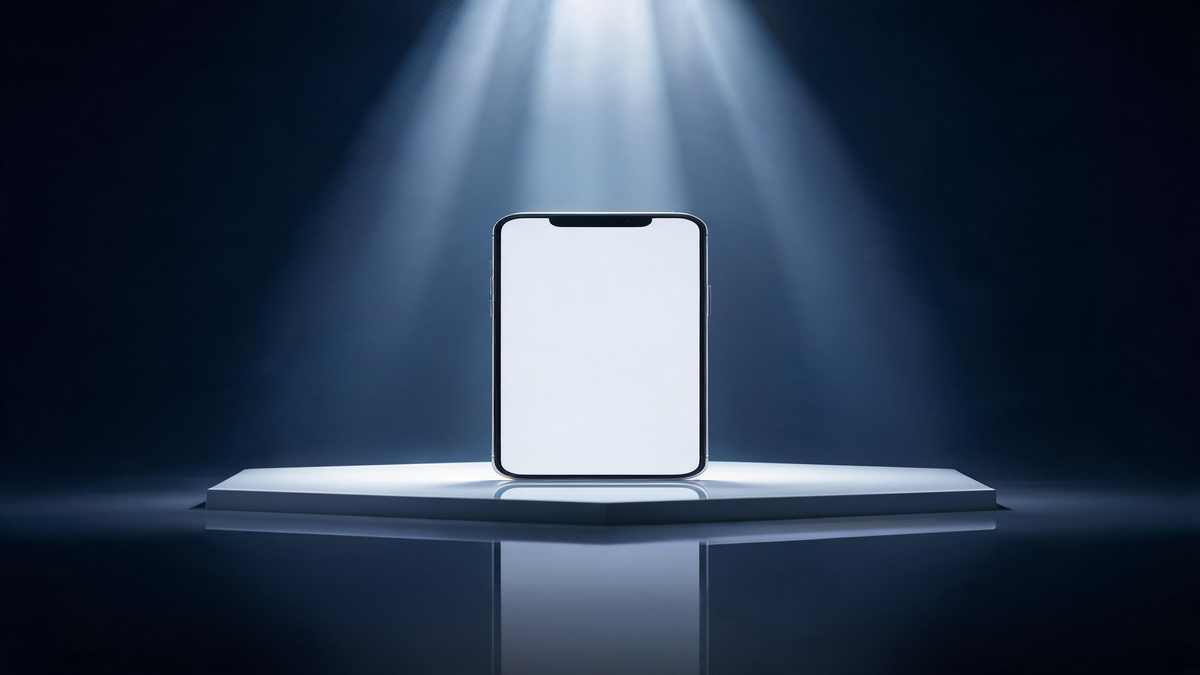
Apple has officially launched the iPhone 17 lineup, and it's the most significant redesign since the iPhone X. Four new models — iPhone 17, iPhone 17 Air, iPhone 17 Pro, and iPhone 17 Pro Max — bring a titanium unibody design, a 48MP telephoto camera system, the A19 Pro chip built on TSMC's 2nm process, and Apple Intelligence 2. With pre-orders starting August 8, here's everything you need to know to decide if it's worth your money.
AdSense Ad (728×90)
Design: Titanium Redesign
The iPhone 17 introduces a new titanium unibody frame — a single piece of Grade 5 titanium that replaces the stainless steel + aluminum sandwich of previous generations. At just 7.8mm thick (down from 8.25mm on the iPhone 16 Pro), it's the thinnest Pro model Apple has ever made, and it's noticeably lighter in hand.
The back glass is now matte across all models, and the camera bump has been integrated into a single flush module that sits flat on a table — no more wobbling. The Action Button (introduced on the 16 Pro) is now standard across all four models, and the new "Camera Control" capacitive button on the right edge lets you launch the camera and adjust settings with a press-and-slide gesture.
Color options are refreshed across the lineup. The Pro models come in Natural Titanium, Blue Titanium, Graphite Titanium, and a new Desert Gold. The standard iPhone 17 and Air come in six colors including a vibrant Coral and a deep Midnight Blue.
Camera: 48MP Telephoto
This is the headline feature for most buyers. After years of Samsung and Google outpacing Apple on zoom photography, the iPhone 17 Pro and Pro Max finally get a 48MP telephoto lens:
- iPhone 17 Pro: 48MP telephoto with 5x optical zoom
- iPhone 17 Pro Max: 48MP telephoto with 8x optical zoom — the longest reach on any iPhone
- Main & Ultrawide: Both upgraded to 48MP sensors with improved low-light performance
The jump from 12MP to 48MP on the telephoto isn't just about megapixels — it enables pixel binning for dramatically better low-light zoom shots, and the 8x optical zoom on the Pro Max finally matches (and in some scenarios exceeds) what the Samsung Galaxy S26 Ultra offers. Apple's computational photography pipeline (Smart HDR 6, Photonic Engine 2) processes each 48MP frame in under 200ms.
Video gets a major upgrade too. All four models now shoot 4K ProRes at 120fps, and the Pro models add 8K video recording at 30fps — a first for iPhone. Cinematic Mode now supports 4K Dolby Vision at 60fps.
"The 8x telephoto on the Pro Max isn't just catching up to Android — in good lighting, it produces shots that rival a dedicated point-and-shoot camera." — Apple keynote
AdSense In-content Ad
A19 Pro: First 2nm Chip
The iPhone 17 Pro models are powered by the A19 Pro, the first commercially available chip built on TSMC's 2nm process. The numbers are impressive:
- CPU: 20% faster than A18 Pro (6-core: 2 performance + 4 efficiency)
- GPU: 30% faster, with hardware ray-tracing v2 for console-quality mobile gaming
- Neural Engine: 35 TOPS (up from 28 TOPS), critical for on-device AI
- Power efficiency: 35% better battery life under heavy use
In real-world terms: the A19 Pro makes the iPhone 17 Pro the fastest smartphone on the market by a comfortable margin. Gaming at 120fps with ray tracing is now possible without external cooling. More importantly for most users, the efficiency gains translate to roughly 3 extra hours of battery life on the Pro Max compared to the 16 Pro Max.
Apple Intelligence 2
Apple Intelligence 2 is Apple's second-generation on-device AI platform, and it's a genuine upgrade — not just marketing. Key features:
On-device LLM. A 7B parameter language model runs entirely on the A19 Pro, no cloud required. It handles text summarization, smart replies, proofreading, and notification prioritization with sub-second latency. Your data never leaves the device.
Visual Intelligence. Point the camera at anything — a restaurant, a product, a landmark — and Visual Intelligence identifies it and surfaces relevant information. It's Google Lens but integrated deeper into the OS.
Siri 2. The new Siri understands context across apps, can take multi-step actions ("Move my last 10 photos to a new album called Vacation and share it with Sarah"), and processes natural language more naturally. It can also use ChatGPT-style conversation when needed, powered by on-device models.
Privacy-first. All Apple Intelligence 2 processing happens on-device by default. For complex queries that need more compute, Apple's Private Cloud Compute sends only the relevant data (anonymized) to Apple's servers — and you can audit what was sent.
Pricing & Configurations
Here's the full pricing breakdown for the iPhone 17 lineup:
| Model | 128GB | 256GB | 512GB | 1TB |
|---|---|---|---|---|
| iPhone 17 | $799 | $899 | $1,099 | — |
| iPhone 17 Air | $899 | $999 | $1,199 | — |
| iPhone 17 Pro | $999 | $1,099 | $1,299 | $1,499 |
| iPhone 17 Pro Max | $1,199 | $1,299 | $1,499 | $1,699 |
Prices are unchanged from the iPhone 16 lineup — Apple held the line despite the significant hardware upgrades. Trade-in values range from $200 (iPhone 14) to $530 (iPhone 16 Pro Max) when trading in directly with Apple.
Pre-orders open August 8 at 5 AM PT / 5:30 PM IST. Retail availability begins August 15.
Should You Upgrade?
Three reasons this year's iPhone is worth serious consideration:
1. The camera finally catches up to Android. The 48MP telephoto with 8x optical zoom on the Pro Max closes the gap with Samsung and Google. If you've been holding off because iPhone zoom was inferior, this is your year. The 8K video recording is a bonus for content creators.
2. Apple Intelligence 2 is a real upgrade. Unlike the first-generation Apple Intelligence (which was underwhelming), version 2 with the on-device LLM and contextual Siri is genuinely useful. If you use your phone for productivity, the AI features save real time — smart summaries of long emails, notification triage, and the multi-step Siri actions are all improvements you'll notice daily.
3. The super-cycle thesis. There are an estimated 400 million iPhones in use that are 3+ years old (iPhone 13 and earlier). The iPhone 17 is the first model that meaningfully improves camera, battery, and AI simultaneously — the classic recipe for an upgrade super-cycle. If you have an iPhone 14 or earlier, the jump to 17 is enormous. If you have a 15 or 16 Pro, the improvements are more incremental.
The verdict: If you have an iPhone 15 or older, upgrade. The camera alone is worth it. If you have a 16 Pro, you can wait — unless on-device AI or 8K video matters to your workflow. The iPhone 17 Pro Max is the model to get if budget allows — it has the best camera, the longest zoom, the biggest battery, and the 1TB storage option.
For more tech coverage, see our deep dive on GPT-5 and today's trending stories.
Frequently Asked Questions
When does the iPhone 17 come out?
The iPhone 17 lineup was announced on August 1, 2026. Pre-orders begin Friday, August 8 at 5 AM PT / 5:30 PM IST, with retail availability starting Friday, August 15, 2026. All four models — iPhone 17, iPhone 17 Air, iPhone 17 Pro, and iPhone 17 Pro Max — will be available simultaneously on launch day.
How much does the iPhone 17 cost?
Pricing starts at $799 for the iPhone 17 (128GB), $899 for the iPhone 17 Air (128GB), $999 for the iPhone 17 Pro (128GB), and $1,199 for the iPhone 17 Pro Max (128GB). Storage upgrades add $100-300 depending on the tier. Prices are unchanged from the iPhone 16 lineup. Trade-in credits range from $200 to $530.
Should I upgrade from iPhone 15 to iPhone 17?
Yes — the iPhone 17 is a significant upgrade from the iPhone 15. You get the 48MP telephoto camera (5x on Pro, 8x on Pro Max), A19 Pro 2nm chip with 35% better battery life, Apple Intelligence 2 with on-device LLM, USB-C with Thunderbolt 4, and the redesigned titanium frame. The jump from 15 to 17 spans two generations and includes the most meaningful camera and AI upgrades Apple has shipped in years.
Does the iPhone 17 have USB-C?
Yes, all iPhone 17 models use USB-C. The Pro and Pro Max models support Thunderbolt 4 speeds (up to 40Gbps), enabling fast data transfers and direct connection to high-resolution external displays. The standard iPhone 17 and iPhone 17 Air support USB 3.2 speeds (up to 10Gbps). Apple includes a braided USB-C cable in the box.