Scale AI layoffs: what is confirmed and what is not: Scale AI really did cut 200 employees and 500 contractors — in July 2025, after Meta's $14.3 billion investment — but the 2026 headlines recycling the story usually belong to Meta's own 8,000-job cut or to industry-wide AI-layoff statistics. The honest framing: the verified event is smaller and older than the traffic it generates — which is exactly why it works as a case study for reading any AI layoff headline. This report separates the confirmed from the conflated.
Confirmed: Scale AI cut 200 full-time employees (about 14% of its workforce) and ended work with 500 contractors in July 2025, weeks after Meta's $14.3 billion investment, largely in its data-labeling business. Not confirmed: viral claims of mass layoffs at Scale in 2026 — most conflate Scale with Meta's separate 8,000-job cut or industry-wide AI-layoff numbers.
Here is every load-bearing claim in this story, sorted by verification status. The confirmed core is narrow and precise; most of what circulates under the "Scale AI layoffs" headline is broader industry news glued onto it.

| Claim | Status | Verified detail | Source |
|---|---|---|---|
| Scale cut 200 full-time staff | CONFIRMED | ~14% of workforce, July 2025, severance provided | Bloomberg, TechCrunch (Jul 16, 2025) |
| Scale ended 500 contractor relationships | CONFIRMED | Global contractors, largely data-labeling segment | Bloomberg, TechCrunch (Jul 16, 2025) |
| Cuts followed Meta's $14.3B deal | CONFIRMED | 49% stake, ~$29B valuation, June 12-13, 2025; CEO Wang to Meta | Multiple (Jun 2025) |
| "Thousands laid off at Scale in 2026" | CONFLATED | Imports Meta's separate ~8,000-job cut (Apr 2026) | AFP-sourced reporting |
| "Scale AI shutting down" | FALSE | Company operates; headcount ~5,790 (2026 est.) | Revelio Labs estimate |
| 2024 "1,300 contractors cut" claim | DISPUTED | Scale said 61; workers said more; never fully reconciled | Inc. (Aug 2024) |
The pattern worth noticing: the verified event happened in July 2025, weeks after Meta's investment — and everything since has been estimates, tangents, or other companies' news. That gap between a real event and its echoes is exactly why this case study exists.

The confirmed cuts came roughly a month after Meta reshaped Scale's future. On June 12, 2025, Meta invested $14.3 billion for a 49% stake in Scale AI, valuing the company at about $29 billion — and Scale's CEO and founder Alexandr Wang left to join Meta's superintelligence lab.
That deal created a strange situation: Meta became Scale's largest investor and effectively absorbed its leadership, while Scale's biggest customers — rival AI labs training frontier models — suddenly had an awkward question about sharing their data through a Meta-influenced company. Reports around the July cuts pointed to exactly that: some customers pulling back, and Scale publicly denying that customer losses drove the layoffs while confirming the data-labeling reorganization.
The strategic logic was visible in where the cuts landed. The 200 employees and 500 contractors came largely from the data-labeling business — the segment where Scale built its name — as the company pushed its remaining identity toward enterprise and government AI systems. A company that just lost its independent chief executive, and whose core commodity segment faced both competition and reputational questions, chose to shrink the old business and lean on the new one.

Scale AI did not shut down or collapse — it operates today as "Reliable AI Systems for Critical Decisions," selling model evaluation and agent-readiness systems to enterprises and governments, with the data-labeling legacy business reorganized underneath.
Third-party headcount estimates (Revelio Labs, derived from public profiles) put Scale at roughly 5,790 employees in 2026, down about 7.3% from 6,961 in 2025 — consistent with the confirmed July cuts plus natural attrition, not a continuing layoff wave. Treat those numbers as estimates; headcount trackers are directional, not payroll data.
The honest summary: Scale is smaller, refocused, and still a major player — a case study in how a "checked-out" acquirer-investor changes a startup's trajectory without killing it.

Here is the single biggest source of confusion: in April 2026, Meta announced its own layoff of roughly 10% of its workforce — about 8,000 employees — with cuts beginning around May 18, 2026. Those cuts are real, they are Meta's, and they have nothing to do with Scale AI's headcount — Meta employs tens of thousands of people; Scale is a separately operated company Meta invested in but did not absorb.
Search behavior glues these stories together: "Scale AI layoffs" and "Meta layoffs" share names, timing-adjacent news cycles, and the same investor relationship. But the verified facts live in separate boxes — Scale cut 200 people in July 2025; Meta cut ~8,000 of its own staff starting May 2026. If a post or video cites thousands laid off at Scale, it is importing Meta's numbers into the wrong company.
Verification rule: before sharing any "Scale AI layoffs" post from 2026, check the date on the underlying report. The confirmed cuts are from July 2025 — everything newer attached to Scale's name is someone else's news.

The wider context is real and large, and it deserves its own box — clearly labeled as industry-wide, not Scale-specific:
Those numbers describe an industry reorganizing around AI — hiring into AI-adjacent roles while cutting elsewhere, a structural shift our AI news coverage follows continuously. None of them are Scale AI numbers. When you see "AI layoffs" statistics shared without a company attached, they are usually this industry picture, not a single-company event.
The strongest counterargument to the obvious storyline: data labeling did not die — it moved up the skill curve. The July 2025 cuts hit Scale's commodity labeling segment, where competition from rivals and automation pressure is real. But the same period saw frontier labs paying premium rates for expert-level data: PhD-grade science annotations, code review by senior engineers, multilingual specialist content. Scale itself now sells "agent-readiness" and evaluation systems — services built on exactly that expert-data machinery.
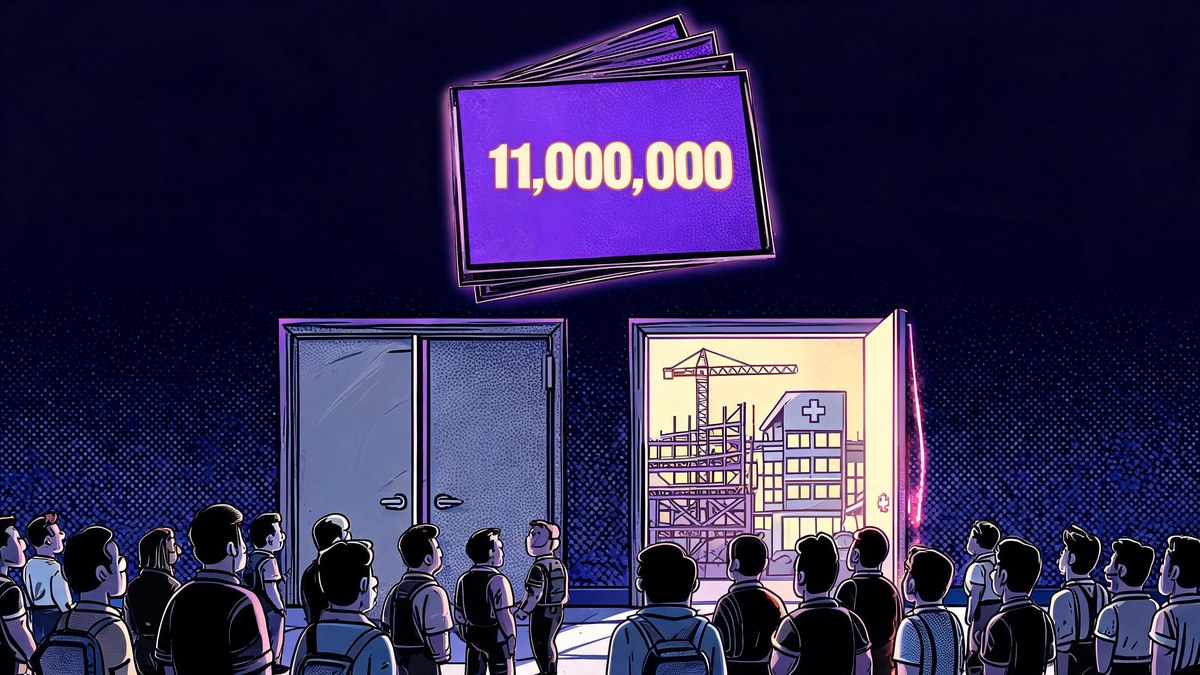
So the confirmed cuts are better read as a segment rotation than an obituary. Commodity annotation is being automated and commoditized; expert data became more valuable. Both things happened at once, and the "AI killed data labeling" headline flattens a story that is actually about the work moving, not disappearing. For workers, the practical signal matches our earlier reporting on which AI jobs will not survive: the routine tier is shrinking, the judgment tier is hiring — the same conclusion McKinsey reached at economy scale in its 11-million-jobs analysis.


Five checks, ten minutes, and you will not get caught by the next conflated headline:
Our 12 tests for verifying crypto and tech news generalize: the same discipline works on layoff stories, funding rumors, and every "sources say" report in between.
Every claim above was checked against named, dated sources in October 2026: the July 2025 cuts against Bloomberg's and TechCrunch's contemporaneous reports plus Scale's spokesperson statements; the Meta deal terms against multiple June 2025 reports ($14.3 billion, 49%, ~$29 billion valuation, Wang to Meta's superintelligence lab); Meta's 2026 layoffs against AFP-sourced reporting; industry totals against named trackers (Kore1, Skillsyncer, Yahoo Tech) with their methodologies linked; headcount against Revelio Labs estimates, labeled as estimates. Where numbers were disputed — the 2024 contractor-cut count, for example — the dispute itself is reported rather than resolved by preference. Layoff claims sourced only to social posts were left out entirely.
Yes. In July 2025, Scale AI laid off about 200 full-time employees — roughly 14% of its workforce — and ended work with 500 global contractors, largely in its data-labeling business. The cuts came about a month after Meta's $14.3 billion investment in the company.
The confirmed cuts hit the data-labeling segment, about a month after Meta's 49% investment and CEO Alexandr Wang's departure to Meta. The company reorganized toward enterprise and government AI systems while the commodity labeling business faced competition and automation pressure.
Yes. Scale operates today selling enterprise and government AI systems — model evaluation and agent-readiness — with third-party estimates putting headcount around 5,790 in 2026, down from roughly 6,960 in 2025.
No. Meta's 2026 layoffs — about 8,000 jobs announced in April 2026 — affected Meta's own workforce. Scale AI is a separate company in which Meta holds a 49% stake; its confirmed cuts were the July 2025 action.
Per Revelio Labs estimates, about 5,790 employees in 2026, down roughly 7.3% from 2025. Treat third-party headcount figures as directional estimates rather than official payroll data.
Yes — trackers counted 52,050 tech job cuts in Q1 2026 (the most since 2023) and over 190,000 across 2026, with about 41% of layoff events citing AI or automation. Those are industry-wide figures, separate from any single company's cuts.
If you work in or around AI data work, the confirmed story is a segment shift, not an extinction: routine annotation is compressing, expert-level data work is commanding premiums, and the companies that survived are selling judgment, not clicks. And if you read layoff news at all, keep the five verification checks handy — this case study took an afternoon to verify and disproved half of what circulates under its own headline.
This report verifies claims as of October 11, 2026 using named, dated sources. Layoff figures change; third-party headcount estimates are directional. Nothing here is career, legal, or investment advice.