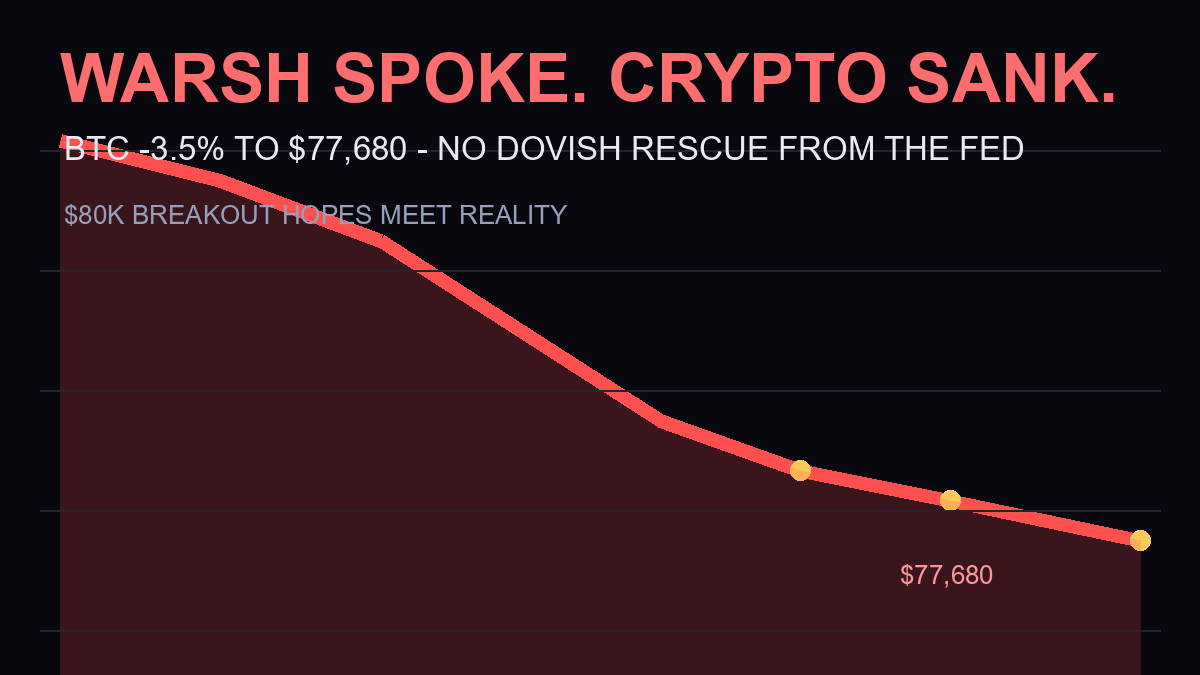
Will the Fed Raise Rates in September 2026? Odds, Dates and What Warsh Has Signaled


Short answer: the market says it’s a coin flip — slightly tilted toward YES. Prediction markets put the odds of a September rate hike at roughly 48–56% (Kalshi at 56%, CNBC’s read at 48%), Fed funds futures sit near 40% (Forbes, Aug 12), and Goldman Sachs still expects the Fed to hold at 3.50–3.75% through 2026. The truth: nobody knows — and the one data print that decides it hasn’t been released yet. Here’s everything we know, updated as of September 1.
The Quick Answer Box
- Next Fed meeting: September 15–16 (per DefiRate’s FOMC calendar) — decision lands mid-September, with the first Warsh-era hike priced near a coin flip
- Hike odds (Sept 15–16 meeting): ~48% (Kalshi via CNBC), 56% on Kalshi’s own market page, 40% on CME futures as of Aug 12 (Forbes)
- What Warsh has signaled: “discipline, not decision” — a hike if August CPI/PPI come in firmer (Morningstar’s read of his Jackson Hole keynote)
- What Goldman says: Fed holds at 3.50–3.75% through 2026; cuts pushed to next year
- The decider: August CPI/PPI prints — firmer numbers tilt Warsh to hike; cooling ones seal a hold
Why This Decision Is Different From Every Recent One
Every Fed since Greenspan has guided markets. Warsh is deliberately breaking that pattern: “forward guidance has overstayed its welcome,” he said at Jackson Hole — and his Fed has withheld its own forecasts (Reuters’ read of the new communications posture). That means no telegraphed hike — markets are pricing blind, which is exactly why prediction-market odds have swung from 35% to 60% and back to a coin flip in two weeks. Under Warsh, the data decides, not the speeches.
What the Forecasters Are Actually Saying
Goldman Sachs (via Yahoo Finance): hold at 3.50–3.75% through 2026 — the institutional anchor. Forbes’ Bill Conerly (Aug 12): futures at 40% hike odds, and he still expects a September hike despite cooler CPI — the lone strong public “YES” call. Morningstar: hike possible if August CPI/PPI are firmer, but core CPI momentum argues for a hold. Chase’s market desk: 25bp hike “now expected” amid Iran-related energy shocks keeping inflation sticky — the newest institutional flip toward YES. Schwab’s FOMC recap noted the market saw a 60.1% hike chance immediately after Warsh’s press conference, cooling from 78.8% on the prior meeting day — evidence of how violently Warsh-era odds swing on words alone.
The Two Data Prints That Decide It
August CPI (mid-September release): if headline or core runs hot again, Warsh’s “predominant focus on prices” language effectively pre-commits a hike. August PPI: upstream inflation — Warsh’s task-force era has elevated this print’s importance. Everything else (jobless claims, PMIs) is noise compared to these two. Prediction markets will converge to near-certainty the moment CPI drops — the current coin-flip pricing exists precisely because the decider is still pending.
What a September Hike Means for Your Money
Loans and EMIs: floating-rate borrowing gets costlier within one billing cycle of a hike — new loans price higher immediately. Savings: the flip side — deposit rates and T-bill yields rise, the best risk-free returns of the cycle. Gold and Bitcoin: historically sold into hikes and rallied after delivery — the 2022–23 pattern, with leveraged positioning explaining the overshoot (our hike-odds breakdown covers the scenarios). Stocks: growth stocks compress on higher discount rates; value and cash-flow sectors weather it better.
Frequently Asked Questions
When is the next Fed meeting in 2026?
The September FOMC meeting falls on September 15–16, 2026, per the FOMC calendar tracked by DefiRate. The rate decision and Warsh’s press conference come at the end of the second day.
What are the odds the Fed raises rates in September 2026?
Roughly a coin flip, slightly tilted to a hike: Kalshi shows 56% for a 25bp hike, CNBC cites 48% on the same platform, CME futures sat near 40% as of mid-August, and Chase’s desk now “expects” a 25bp hike on energy-shock inflation. Goldman Sachs is the main institutional hold call (3.50–3.75% through 2026).
Why is Warsh considering a rate hike when inflation was cooling?
The Fed’s preferred PCE price index is running at 3.7% year-over-year — well above the 2% “firm, fixed” target Warsh has pledged. His Jackson Hole message was that the “predominant focus” is prices, and that policymakers “have work to do” if underlying inflation isn’t clearly returning to target (Reuters).
What happens to gold, Bitcoin and loans if the Fed hikes?
Historically: Bitcoin and gold sell into hikes and rally after delivery, leveraged positions unwind hardest, floating-rate loans and new EMIs get costlier, and savings rates improve. The 2022–23 cycle is the template — pain during the wait, relief after the decision.
Sources
- CNBC — September decision “a coin flip,” Kalshi 48%
- Kalshi — Fed decision market: 56% hike / 42% hold
- Yahoo Finance — Goldman Sachs hold forecast (3.50–3.75% through 2026)
- Forbes (Conerly) — 40% futures odds, expects hike
- Chase — 25bp hike expected on energy shocks
- Morningstar — Warsh hawkish read, CPI/PPI dependency
- Reuters — “have work to do” on inflation, guidance posture
- Schwab — post-press-conference 60.1% spike documentation
- DefiRate — FOMC calendar + prediction-market aggregation
Read Next
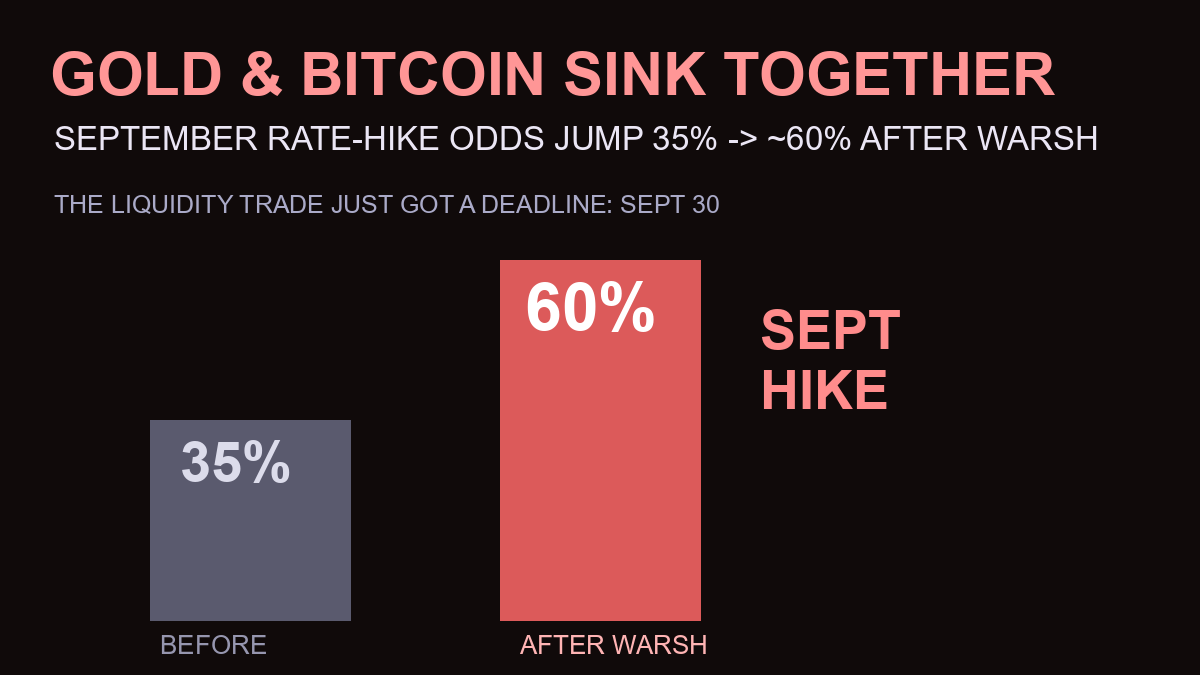
September Hike Odds Hit 60%: Gold & Bitcoin Sink Together
What Fed Chair Warsh Means for Your Money