
Trump Crypto Firm Backs Venture Selling Restricted Chinese AI
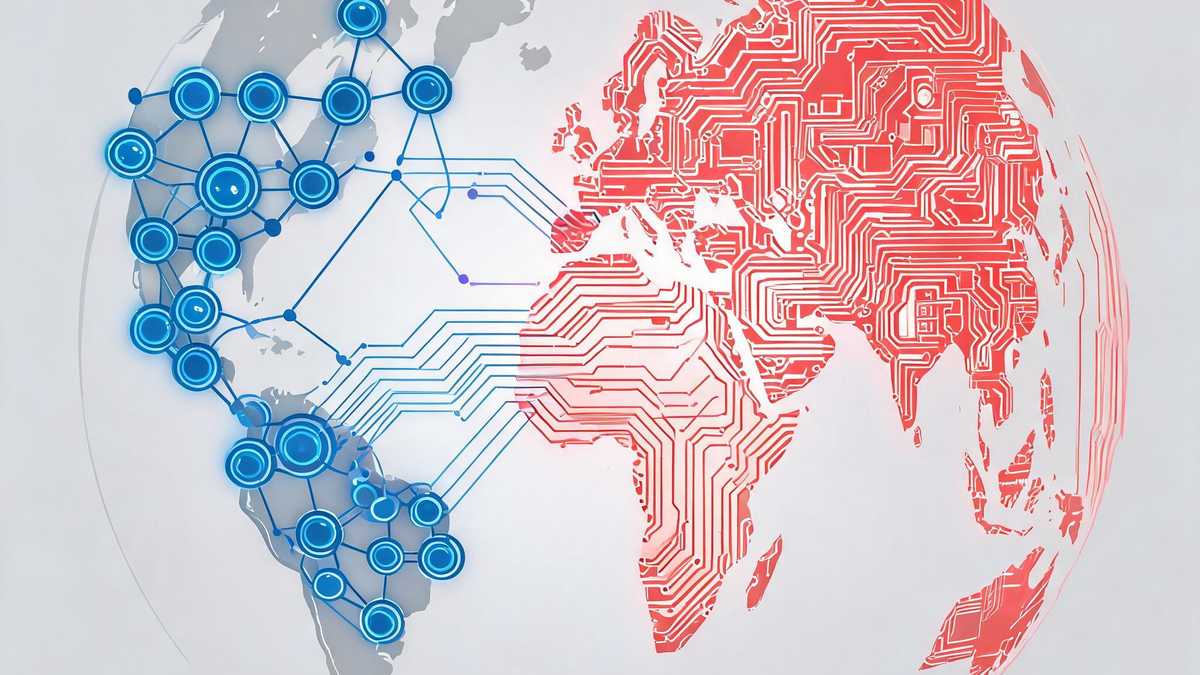
President Donald Trump's crypto venture World Liberty Financial is collaborating with a Hong Kong-based AI platform that sells models developed by Chinese companies the U.S. government has flagged for national security risks, Reuters reported on August 17.
The venture, called WorldClaw, offers customers access to 90 AI models. Nearly half, 43 of them, come from Alibaba, Baidu, Z.ai, DeepSeek, and Moonshot, Chinese technology companies that the Trump administration says pose risks to national security and intellectual property.
Table of Contents
The collaboration
WorldClaw, founded earlier in 2026, operates a platform called WorldRouter that aggregates access to various AI models. The company says it has more than 10,000 users processing over 50 million requests per day. WorldClaw also offers models from U.S. firms including OpenAI and Anthropic alongside the Chinese alternatives.
The connection to World Liberty Financial runs deep. WorldClaw accepts World Liberty's USD1 stablecoin as payment for AI model access. A World Liberty executive, Ryan Fang, serves as an external adviser to WorldClaw, focusing on USD1 adoption and global partnerships. President Trump's sons, Donald Trump Jr. and Eric Trump, have publicly promoted WorldClaw on social media platform X.
"This is the future of finance," Eric Trump wrote in a post about the collaboration. Donald Trump Jr. told followers in May that contest winners would meet him at Mar-a-Lago through a WorldClaw promotion.
Which Chinese companies are involved?
The Chinese AI models available through WorldClaw come from companies under various forms of U.S. government restriction:
- Alibaba and Baidu: Both are on the Department of Defense's list of Chinese military-aligned companies, which blocks the Pentagon from doing business with them.
- Z.ai (formerly Zhipu AI): On the Department of Commerce's Entity List, which severely restricts access to U.S. technology. The listing states Z.ai advances China's "military modernization" through AI research "contrary to the national security and foreign policy interests" of the United States.
- DeepSeek and Moonshot: Trump administration officials have accused both of stealing intellectual property from U.S. AI competitors.
Alibaba has disputed its designation, calling it "arbitrary and capricious" and threatening legal action. Baidu, Z.ai, DeepSeek, and Moonshot did not respond to Reuters' requests for comment. The Chinese government has rejected the claims of technology theft.
The crypto payment pipeline
The financial arrangement works as follows: WorldClaw users pay for AI model access using cryptocurrencies, including World Liberty's USD1 stablecoin. USD1, like other dollar-backed stablecoins, is collateralized by U.S. Treasury securities and maintains a constant one-dollar value.
World Liberty earns revenue from the use of its tokens, including transaction fees and interest on the reserve assets backing USD1. The Trump family, through its 38% ownership stake in World Liberty, is entitled to a percentage of that revenue. Every time a WorldClaw customer pays with USD1, the Trump family benefits financially.
This creates an unusual feedback loop: a U.S. president's family earns crypto revenue from a platform selling AI models developed by companies his own administration has restricted. The arrangement is not illegal, but it highlights the complex intersections between Trump's business interests and his policy positions.
Trump family earnings
The Trump family's crypto earnings are substantial. According to Reuters reporting from June, the family has made more than $1.4 billion from World Liberty token sales alone, out of a total $2.3 billion in crypto-related revenue. The USD1 stablecoin has become a significant revenue stream, particularly as World Liberty expands its partnerships beyond traditional crypto use cases.
WorldClaw represents a new category of adoption: using USD1 as payment for AI services. If the platform's 10,000-plus users increasingly adopt USD1 for AI model access, the transaction volume could meaningfully increase the stablecoin's velocity and, by extension, the Trump family's revenue from reserve interest.
While Trump's sons operate the family business through the Trump Organization, the president retains ownership through a trust. The White House has stated there are "no conflicts of interest."
Ethics and security concerns
Seven experts on Chinese technology, trade, and government ethics told Reuters the collaboration runs counter to the administration's stance toward Chinese tech companies.
"As the U.S. government tries to respond to the rise and threat of Chinese AI, it seems hypocritical to go out through WorldClaw to use these tools from China to try and make a bunch of money," said Sam Bresnick, a fellow at Georgetown University's Center for Security and Emerging Technology.
Security experts raised additional concerns. Daniel Remler, a senior fellow at the Center for a New American Security and former State Department policy advisor, said the Chinese AI models could expose users to monitoring by the Chinese government, censored outputs, and injection of malicious code that could hijack AI agents.
WorldClaw's own website acknowledges it may share user inputs with the companies that provide its AI models, raising questions about data flowing to entities linked to the Chinese military.
Legal but controversial
The collaboration is legal. The Chinese AI models offered by WorldClaw are generally available for individuals and businesses to use in the United States. The restrictions on Alibaba, Baidu, and Z.ai primarily limit U.S. government dealings and technology exports, not consumer access to their software products.
Chinese AI models are also gaining traction globally, including among U.S. tech companies, because they are typically less expensive than their American counterparts. Major U.S. firms offer AI from Chinese as well as American tech companies.
"This is a common and widely accepted approach," said David Wachsman, a spokesman for World Liberty, emphasizing that WorldClaw is an independent company.
But Peter Jeydel, an attorney who leads the sanctions and trade controls team at Troutman Pepper Locke, noted the tension: "On one hand, people could say this is a China-hawk administration, and there is a tension with this type of business collaboration. On the other hand, it can be argued that this Trump presidency has been less aggressive in targeting Chinese companies in favor of a business-first approach."
Broader context
The Reuters report comes at a delicate moment in U.S.-China relations. The two countries are preparing for a summit between Trump and Chinese President Xi Jinping next month, with both sides trying to reduce tensions in an escalating AI arms race. Early in his second term, Trump emphasized beating China in technology; more recently, his administration has adopted a more nuanced approach.
The Trump administration is also drafting a ban on U.S. imports of new models of Chinese data center components, Reuters reported earlier in August. Simultaneously, the president's family business is profiting from a platform that distributes Chinese AI models to American users.
The WorldClaw collaboration also follows a pattern of Trump family crypto ventures intersecting with policy areas. World Liberty Financial received approval for a national trust bank charter from the Office of the Comptroller of the Currency in 2025, raising questions about regulatory favoritism.
Bottom line
The World Liberty-WorldClaw collaboration represents a striking convergence of three of the most consequential trends in 2026: cryptocurrency, artificial intelligence, and U.S.-China strategic competition. That the president's family stands to profit from distributing AI models his own government has restricted creates an unprecedented ethical landscape, even if no laws are broken. As Chinese AI models continue to gain global adoption for their cost and capability, the tension between national security policy and private business interests will only sharpen.
Sources
- Reuters: Trump crypto firm backs venture offering AI from restricted Chinese companies (Aug 17, 2026)
- The Next Web: Trump-backed crypto firm helping sell Chinese AI his government blocks (Aug 17, 2026)
- Troutman Pepper: Legal analysis of World Liberty-WorldClaw (Aug 2026)
- Reuters: Trump administration drafting ban on Chinese data center devices (Aug 4, 2026)
- Anthropic: Investigating incidents in cybersecurity evaluations (Jul 30, 2026)