AI Music Is Getting Banned — From Australia’s Charts to Bandcamp. Here’s Who’s Drawing the Line
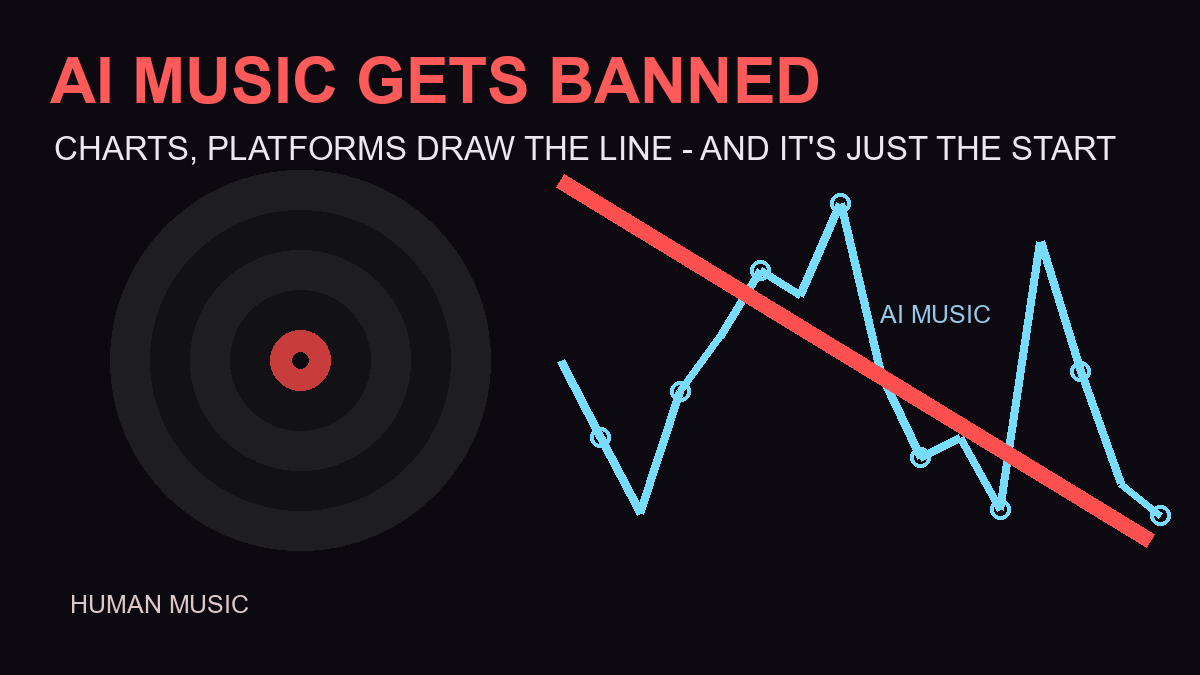
The first coordinated pushback against AI music just went live. From today, songs created mostly or entirely by artificial intelligence are banned from Australia’s official ARIA charts — the world’s first national chart body to draw that line. Bandcamp has already banned AI music outright. Tidal is labeling AI tracks and cutting off their royalties. After two years of AI songs flooding every platform, the industry is finally saying: enough.
Who’s Banning What: The Three Lines Being Drawn
- ARIA (Australia): From the chart dated August 28, wholly AI-generated tracks are ineligible. AI-assisted music stays eligible — but only if it’s “substantially human-made” (ARIA official rules, Aug 25)
- Bandcamp: A complete embargo — “music and audio that is generated wholly or in substantial part by AI is not permitted,” per its official policy post. No “supporting role” exemption. The strictest line in the industry
- Tidal: AI-generated tracks get labeled, and royalties from AI songs are banned where they involve fraudulent activity — including songs impersonating established artists (Variety)
The Madonna Cover That Started It
The immediate trigger for Australia’s move: an AI-generated Madonna-style cover that went viral and — briefly — charted, sparking a backlash Al Jazeera captured in its headline: “Australia’s music charts ban AI-made songs amid backlash over Madonna cover.” The incident exposed the gap every chart body feared: AI tracks can now sound real enough to climb charts built on human achievement — and no rules existed to stop them.
ARIA’s official position: charts should “celebrate human creativity rather than reward” fully automated output. Whether that principle survives contact with the actual definitions is where it gets messy.
Can platforms even tell? The enforcement question behind every ban: we compared the detectors — Deezer’s 99.8% claim, IRCAM’s 99%, and the research showing where they fail.
The “Substantially Human” Problem
Here’s the hard question all three policies now face: where exactly does AI end and human begin? A producer using AI stems but writing the melody? Eligible under ARIA, banned on Bandcamp. An artist who prompts Suno for a demo, then replays every part by hand? Human-made everywhere, probably. A voice clone of a dead legend? Banned everywhere — impersonation is the one line all three agree on.
The boundaries will be tested fast. AI music platforms are already marketing “human-touch” workflows designed to pass these exact tests — and every platform will have to decide whether detection or disclosure becomes the enforcement tool.
Why This Matters Beyond Music
Music is just the first culture-war front where AI output is getting walled off. The same playbook — label it, restrict its monetization, define “human-made” thresholds — is being debated for books (stock-photo licensing markets already did it), stock imagery, and video. If ARIA’s rule holds through its first chart cycle, expect other national chart bodies — and streaming platforms watching the PR — to follow within months. The EU’s AI Act already requires disclosure of AI-generated content; industry self-regulation is now running ahead of law.
Frequently Asked Questions
Is AI music banned in Australia now?
Wholly AI-generated songs are banned from the ARIA charts from the chart dated August 28, 2026 — the first national chart body to do so. AI-assisted tracks remain eligible if they are “substantially human-made.” Listening to AI music isn’t illegal anywhere; this is about chart eligibility.
Did Bandcamp ban all AI music?
Yes — Bandcamp’s policy states music generated “wholly or in substantial part” by AI is not permitted, with no supporting-role exemption. It also bans AI tools used to impersonate existing artists. It announced the policy on its blog and Reddit.
What is Tidal doing about AI songs?
Tidal will label AI-generated music and ban royalties from AI songs tied to “fraudulent activity,” including tracks impersonating established artists, per Variety’s report.
Why was the Madonna cover the trigger?
An AI-generated cover in Madonna’s style went viral and briefly charted, igniting backlash over AI tracks competing with human artists for real chart positions. The incident pushed ARIA to formalize its eligibility rules within weeks.
Sources
- ARIA official — chart eligibility rules for AI recordings
- ABC News — ban effective from this Friday’s chart
- NYT — “substantially human-made” standard
- Al Jazeera — Madonna cover backlash context
- Hollywood Reporter — Bandcamp’s complete AI ban
- Bandcamp official blog — “Keeping Bandcamp Human” policy
- Variety — Tidal labeling and royalty bans