Bitcoin Breaks $80,000: Inside the Rally That Nobody Expected
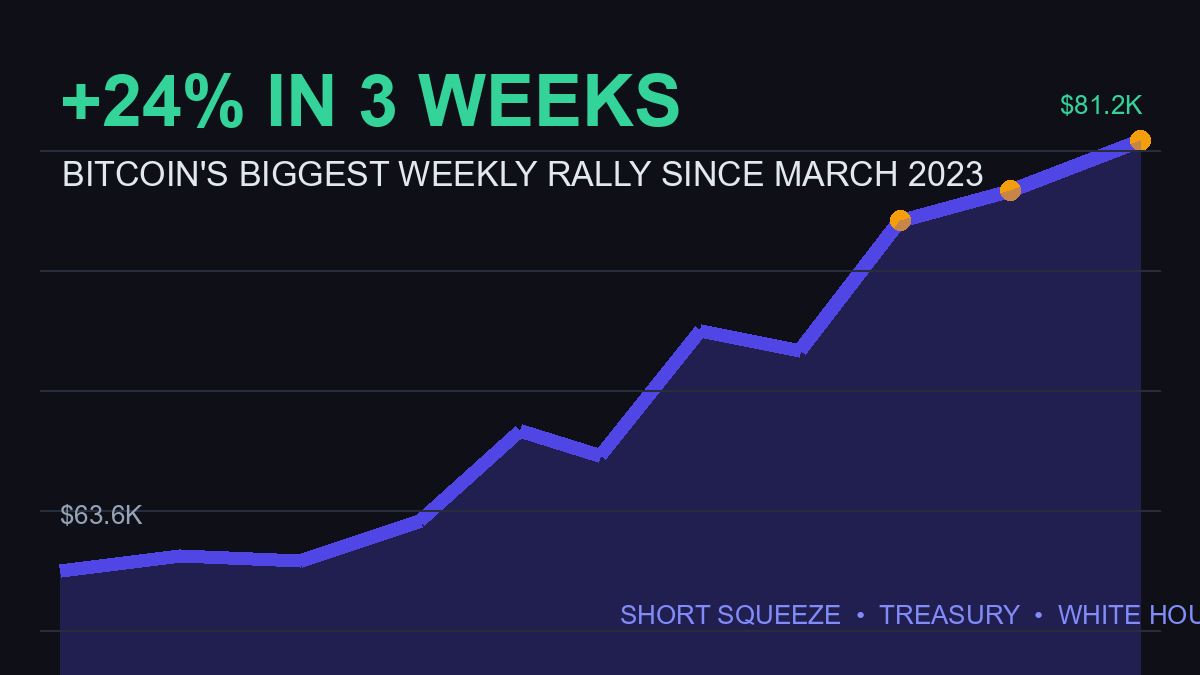
Bitcoin has done something almost nobody predicted three weeks ago: it climbed out of a $63,000 rut and punched through the $80,000 level for the first time since May, touching a three-month high of $81,238 on Tuesday before settling near $78,700. The weekly gain of 23.6% was Bitcoin's biggest since March 2023 — and the mechanics behind it explain why this rally caught both bears and bulls off guard.
The Numbers: From Stuck to Surge in Three Weeks
The reversal is stark. On August 4, Bitcoin traded near $63,586, down about 27% year-to-date, with analysts openly debating whether the bull market was over. Three weeks later, the picture is unrecognizable.
- +23.6% in a single week — the largest weekly rally since March 2023 (Morningstar)
- First trade above $80,000 since May, hitting $81,238 intraday Tuesday (WSJ)
- Record $2.7 billion in short liquidations as the rally accelerated (Bloomberg)
- Spot ETFs resumed consistent net inflows after weeks of outflows (CNBC)
Catalyst #1: A Record Short Squeeze Lit the Fuse
The ignition came on August 19, when Bitcoin jumped nearly 8% ahead of a White House crypto meeting — triggering what Bloomberg called the biggest wave of short liquidations on record: over $2.7 billion. More than $1 billion of shorts were wiped out in roughly an hour.
Squeezes like this are self-reinforcing. Rising prices force short sellers to buy back, which pushes prices higher, which forces more shorts to close. That's why the move was so violent — and why it surprised anyone still positioned for a retest of the lows.
Catalyst #2: Washington Switched From Threat to Embrace
The macro story flipped too. The White House crypto summit earlier this month reaffirmed support for the industry, and the Treasury's new bond-buyback framework unexpectedly became a crypto catalyst: expectations of easier liquidity conditions sent traders piling back into risk assets, while the CLARITY Act's progress reduced the regulatory discount investors had been applying to every crypto asset.
Investor's Business Daily tied the initial breakout directly to these two forces — "Treasury bond plans spark short squeeze, Trump administration reaffirms crypto support." When policy stops being an existential threat, capital comes back first and asks questions later.
Catalyst #3: ETF Money Came Back
Spot bitcoin ETFs had spent much of the summer bleeding inflows. That reversed this week: CNBC reported renewed spot-ETF inflows extending the rally past $81,000, while analysts noted that a lesser-tracked market dynamic — options positioning around ETF flows — lent credibility to the surge rather than undermining it.
This matters because ETF flows were the engine of the 2024–25 institutional adoption wave. Their return suggests the demand shock wasn't a one-off.
The Warning Shot: $270 Million of Longs Just Got Wiped
Rallies this fast cut both ways. After the $80,000 breakout, Bitcoin dipped below $78,000 late Tuesday and roughly $270 million in long positions got liquidated — the squeeze flipped from shorts to longs in a matter of days (CryptoSlate).
That's normal after a parabolic move: over-leveraged traders get cleared out, funding resets, and the market decides whether the next leg has real demand behind it. As of Thursday, Bitcoin is holding near $78,700–$78,800, consolidating rather than collapsing.
What Happens Next: The Levels That Matter
Three scenarios dominate the tape heading into Jackson Hole:
Bull case: A hold above $78,000 keeps the structure intact; a clean reclaim of $81,238 opens the door to $85,000, where the last major resistance cluster sits. Bear case: Losing $76,500 — early Tuesday's flash low — would trap late longs and could restart the descent toward $72,000. Wildcard: Fed Chair Kevin Warsh's Jackson Hole keynote on Friday morning is the week's biggest macro event; a hawkish surprise hits high-beta assets like crypto hardest, which is exactly what happened to risk appetite around last month's 30-year Treasury auction that helped ignite the Treasury-buyback debate in the first place.
Update: The Warsh Repricing
The macro wildcard landed: September rate-hike odds jumped from 35% toward 60% after the keynote, and Bitcoin slid to ~$77,700. Full scenario map in our hike-odds breakdown.
Frequently Asked Questions
Why did Bitcoin suddenly rally to $80,000?
A record $2.7 billion short squeeze ignited the move on August 19, amplified by Treasury bond-buyback plans that improved liquidity expectations, renewed White House crypto support, and returning spot ETF inflows. The combination produced Bitcoin's biggest weekly gain (+23.6%) since March 2023.
Is the Bitcoin rally sustainable?
It depends on ETF inflows continuing and whether Bitcoin holds the $76,500–$78,000 support zone. Roughly $270 million in long liquidations after the peak shows leverage is still elevated. The Federal Reserve's Jackson Hole symposium this week is the next major volatility trigger.
What caused Bitcoin to fall to $63,000 earlier this year?
Bitcoin entered August down about 27% year-to-date, weighed down by ETF outflows, fading hopes for quick rate cuts, and months of distribution. The August 4 price near $63,586 marked the bottom of that range — days before the treasury-driven squeeze began reversing the trend.
Sources
- WSJ — Bitcoin Rally Pauses After Jumping to Three-Month High ($81,238, first $80K since May)
- Morningstar — Why Bitcoin Surged to $80,000 (+23.6% week, biggest since Mar 2023)
- Bloomberg — Crypto Surge Triggers Record $2.7 Billion of Short Liquidations
- CNBC — Bitcoin Price Extends Gains Past $81,000 on ETF Inflows
- CryptoSlate — ~$270M Long Liquidations Below $78K
- Yahoo Finance — BTC Near $63,586 Aug 4, -27% YTD