Hong Kong Just Launched the World’s First Bitcoin + Gold ETF — Here’s Why It Matters
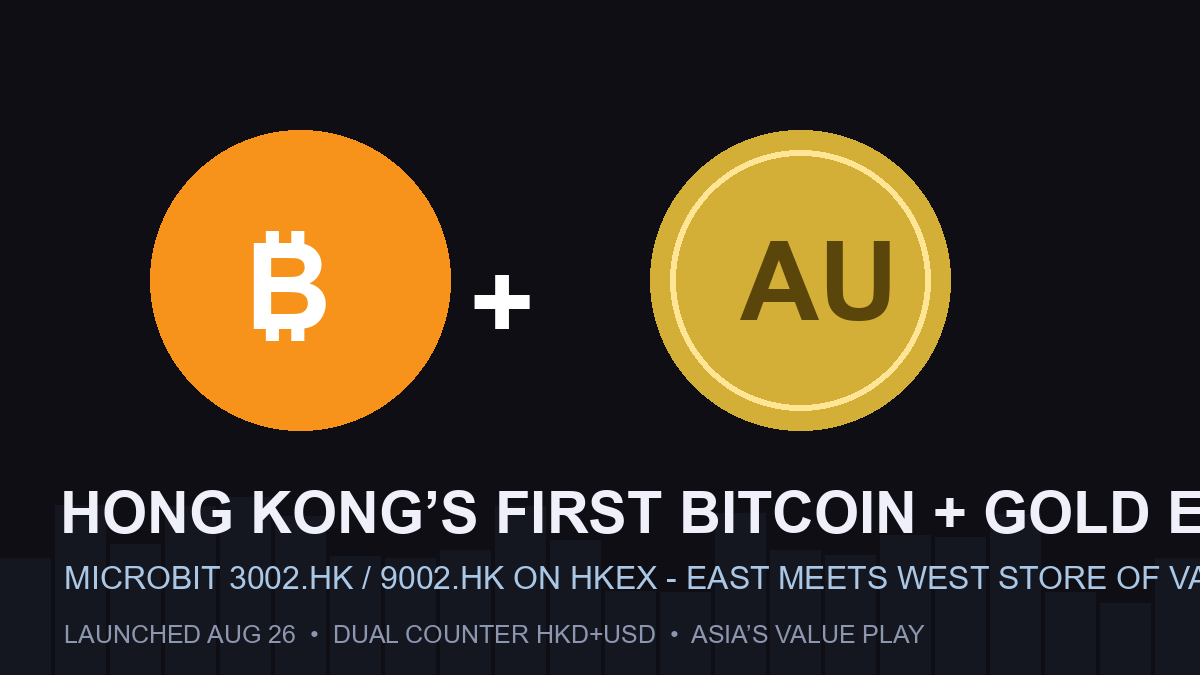

Asia just built the ultimate “don’t trust the system” ETF. On August 26, MicroBit Capital Management listed Hong Kong’s first — and the world’s first dual-asset — Bitcoin and Gold Value ETF on the Hong Kong Stock Exchange, trading under tickers 3002 (HKD counter) and 9002 (USD counter). One fund, two of the biggest store-of-value assets on earth: the crypto that monetary rebels love and the metal central banks can’t stop buying.
What the Fund Actually Is
- Fund: MicroBit Bitcoin and Gold Value ETF, listed on HKEX August 26, 2026 (HKEX’s official X announcement confirmed the dual tickers)
- Counters: 3002.HK trades in Hong Kong dollars; 9002.HK trades in US dollars — dual-counter access for local and international money
- Exposure: both Bitcoin and gold in one wrapper — a “diversified approach across two value asset classes” per the launch materials
- Fee benchmark: MicroBit’s existing Bitcoin Spot ETF (3430.HK) charges a 0.50% management fee — the new fund’s exact fee is pending its full factsheet (KuCoin flagged this)
- What’s NOT confirmed: the exact Bitcoin-to-gold allocation ratio hasn’t been fully disclosed — reports describe a “balanced approach” only. We’ll update when MicroBit publishes the split
Why This Product Makes Sense Right Now
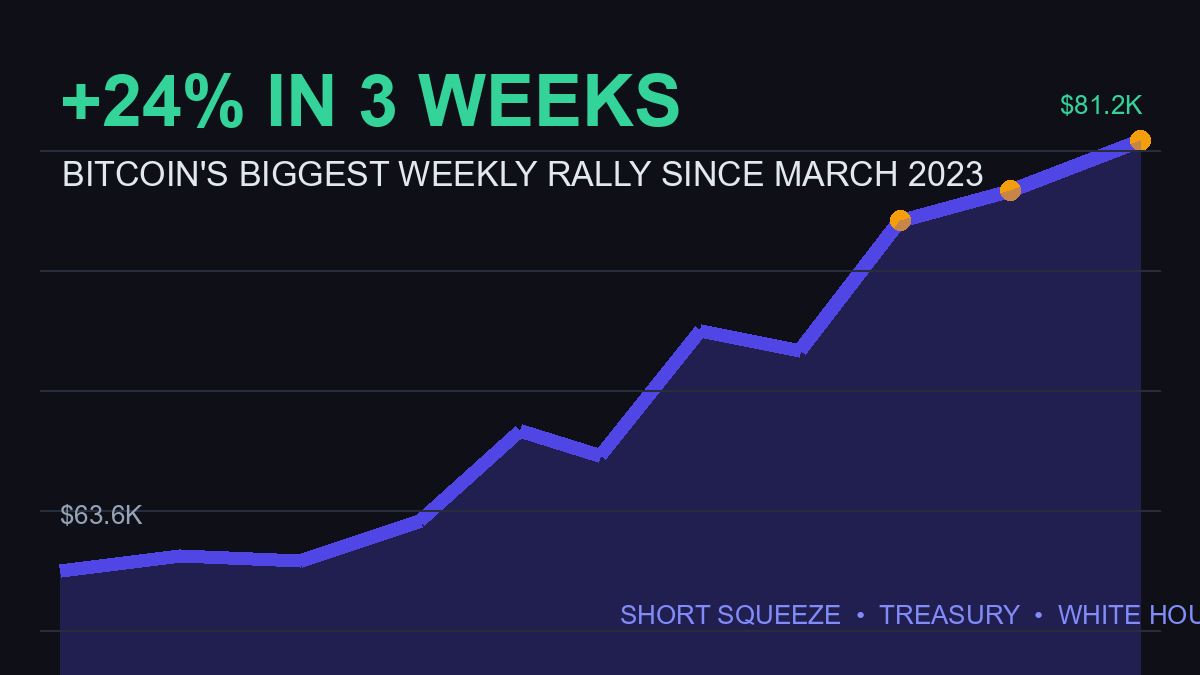
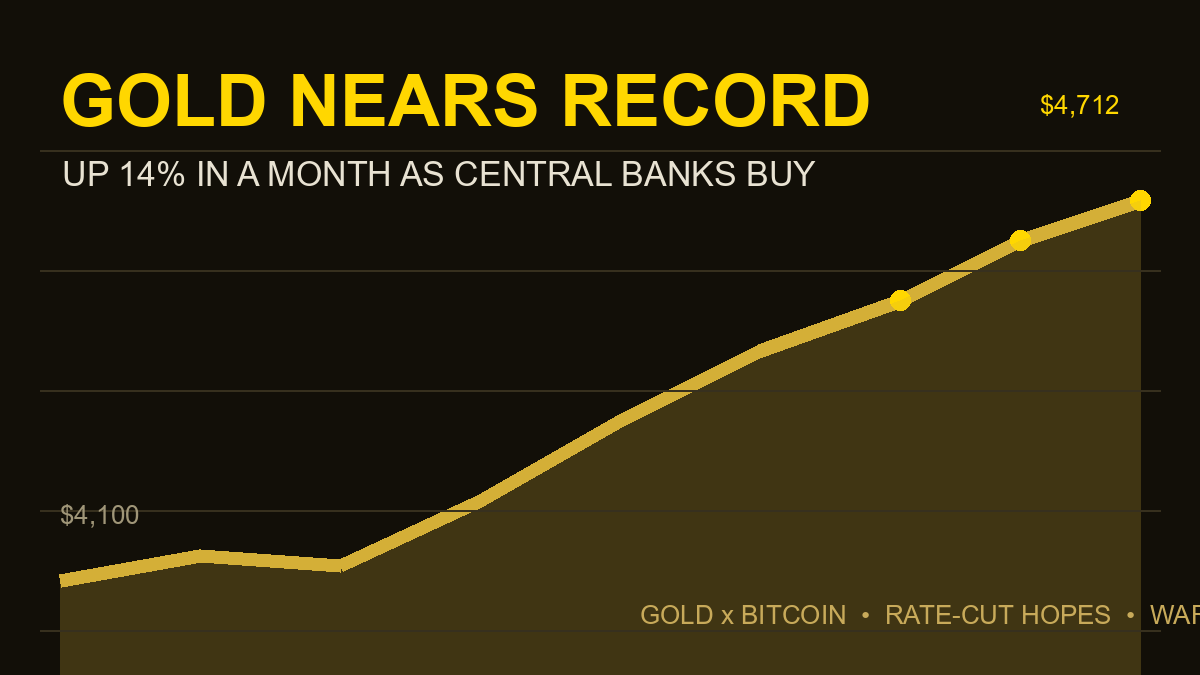
The timing isn’t accidental. This month, gold sits near its all-time high (~$4,600–$4,700) while Bitcoin just staged a $63K-to-$81K breakout — both rallies driven by the same macro anxieties: $40 trillion of US debt, rate-cut uncertainty under a “discipline-first” Fed chair, and central banks hoarding hard assets. Investors who believe the thesis want both assets — and until now, that meant two separate purchases across two market infrastructures.
MicroBit’s wrapper solves a real friction: one brokerage account, one trade, and the fund handles custody of both an illiquid 24/7 crypto asset and a 5,000-year-old metal. For Asian retail investors — who historically bought gold jewelry and are now buying crypto — it’s a natural product bridge.
Asia Is Winning the Crypto-ETF Race Nobody Talks About
While the US ETF debate dominated headlines in 2024–25, Hong Kong has quietly built the most flexible ETF regime in Asia: spot Bitcoin ETFs since April 2024, spot Ether, staking-enabled funds, and now hybrid asset ETFs. The 0.50% fee benchmark MicroBit set on its spot product is already competitive with US issuers. And the dual-counter HKD/USD structure is a genuinely clever hook — mainland-adjacent capital gets RMB-adjacent access while global money can buy in dollars.
The real question is demand: hybrid funds are new, and CryptoRank’s analysis notes that fees, liquidity support, and creation-redemption speed — not the concept — decide whether a fund gathers assets or “remains a listed shell.” Watch the first monthly AUM print.
What Happens Next
Three signals to watch: (1) the full factsheet with the exact allocation ratio and final fees; (2) first-month AUM and daily volumes — does this become Asia’s default “crisis hedge” product or a curiosity?; (3) copycats — if 3002.HK gathers assets, expect Singapore and Tokyo equivalents within two quarters. And in the US, the SEC’s stance on hybrid crypto-commodity ETFs remains the missing piece — Hong Kong just showed regulators what’s possible.
Frequently Asked Questions
What is the MicroBit Bitcoin and Gold Value ETF?
It’s Hong Kong’s first ETF offering exposure to both Bitcoin and gold in a single fund, listed on the Hong Kong Stock Exchange on August 26, 2026. It trades under ticker 3002 (HKD counter) and 9002 (USD counter), issued by MicroBit Capital Management.
What is the ticker for Hong Kong’s Bitcoin and gold ETF?
The dual counters are 3002.HK (Hong Kong dollar) and 9002.HK (US dollar), both on HKEX.
How much Bitcoin and gold does the ETF hold?
The exact allocation ratio hasn’t been fully disclosed in launch materials — reports describe a “balanced approach” across the two assets. MicroBit’s full factsheet with the split and final fees is the key document to watch.
Can US investors buy the Hong Kong Bitcoin-gold ETF?
The USD counter (9002.HK) is designed for international access, but US brokerage availability depends on each broker’s foreign-listing support and tax treatment. US investors also await a domestic hybrid ETF — the SEC hasn’t approved a combined Bitcoin-plus-commodity fund yet.
Sources
- Taiwan News / Media OutReach — launch announcement, dual counters
- Crypto Briefing — first dual Bitcoin+gold ETF, 3002.HK
- HKEX official X — debut confirmation (3002/9002)
- MicroBit official — Bitcoin Spot ETF (3430.HK) 0.50% fee reference
- KuCoin News — fee benchmark context
- CryptoRank — Eddid Financial participating dealer, liquidity analysis
Read Next
Bitcoin Breaks $80,000: Inside the Rally Nobody Expected
Gold Nears Record High: Why Everything Is Rallying at Once